Bangkok vs Chiang Mai vs Phuket: Real Expat Cost of Living
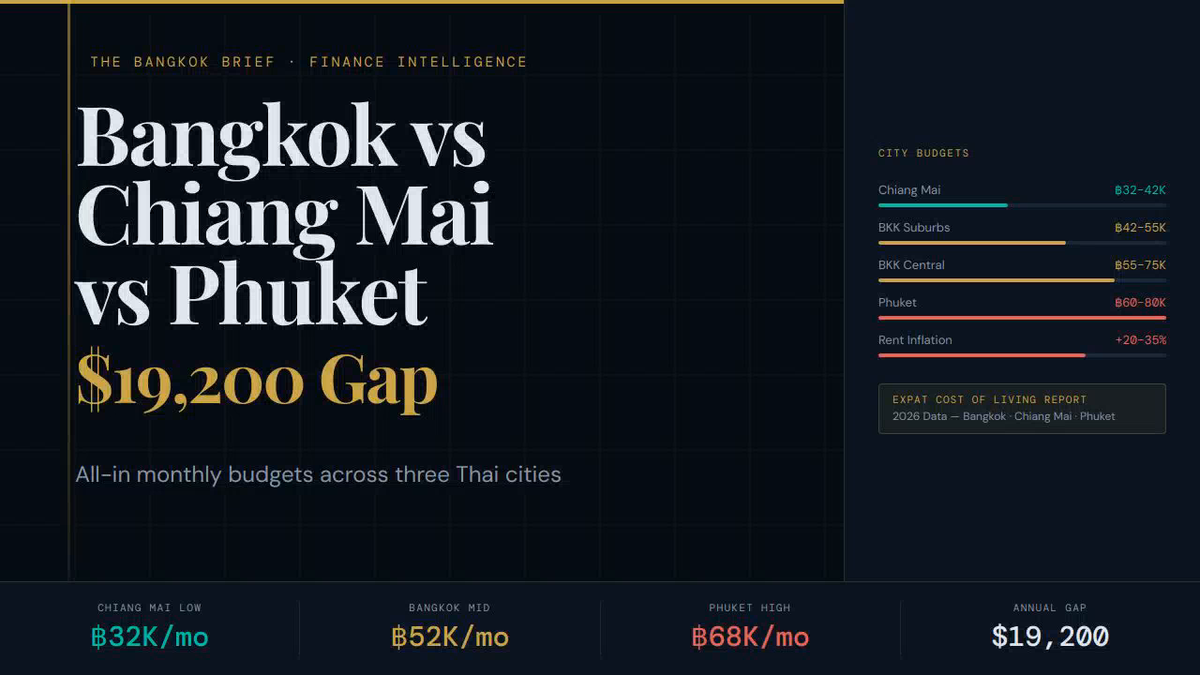
Choosing the wrong Thai city is not a lifestyle mistake — it is a financial one worth up to ฿19,200 per year for an identical quality of life. In 2026, Bangkok, Chiang Mai, and Phuket are three structurally different cost environments. Rent inflation in Phuket has run at 20–35% since 2021 while Thailand's official national figure sits at 1.37%. Bangkok hides an electricity cost almost no budget guide mentions. And Chiang Mai's headline cheapness comes with real trade-offs in income opportunity and connectivity. This guide gives you the actual numbers — by city, by category, by neighbourhood — so you can make a data-driven decision before you sign a lease.
2026 All-In Monthly Budget: Comfortable Single Expat
The figures below represent a comfortable (not luxury, not backpacker) single expat lifestyle: a modern 1-bedroom apartment with air conditioning, a mixed local and occasional Western food diet, regular transport, and basic entertainment. All figures are in Thai Baht at mid-2026 market rates.
| City | Monthly Budget Range (฿) | Annual Cost (฿) | Annual Cost (USD approx.) |
|---|---|---|---|
| Chiang Mai | ฿32,000 – ฿42,000 | ฿384,000 – ฿504,000 | ~$10,700 – $14,000 |
| Bangkok (Mid-Zone) | ฿45,000 – ฿60,000 | ฿540,000 – ฿720,000 | ~$15,000 – $20,000 |
| Phuket | ฿55,000 – ฿72,000 | ฿660,000 – ฿864,000 | ~$18,300 – $24,000 |
The ฿19,200/year gap cited in the headline is the conservative midpoint difference between a Phuket and Chiang Mai equivalent lifestyle — and it widens significantly if you choose a beachfront neighbourhood over an inland Phuket location.
Rent: The Biggest Fixed Cost and the Most Misleading Number
Rent in Thailand is not one market. It is three distinct markets that happen to share a border. Understanding where within each city you rent is as important as which city you choose.
Bangkok
Bangkok rent is driven almost entirely by BTS/MRT proximity. A 1-bedroom apartment in Sukhumvit (central, on-rail) runs ฿28,000–฿37,000/month. Move to a mid-zone neighbourhood like Ari, Ladprao, or On Nut — still rail-connected but not central — and the same spec apartment costs ฿18,000–฿25,000. Go off-rail entirely (Ratchada, Bang Na) and you can find quality units at ฿12,000–฿18,000, but you absorb transport and time costs that partly offset the saving.
Chiang Mai
Chiang Mai has no metro. Neighbourhoods are defined by their relationship to the Old City, Nimman Road, and the university district. A modern, A/C 1-bedroom in Nimman — the expat and digital nomad hub — runs ฿12,000–฿18,000/month. The Old City and surrounding moat area is slightly cheaper at ฿9,000–฿14,000. Long-term leases (6–12 months) typically negotiate to the lower end of these ranges or include utilities.
Phuket
Phuket is the outlier. Since 2021, rent across the island has inflated 20–35% — dramatically outpacing Thailand's official 1.37% inflation rate. A 1-bedroom near Patong or Kata beach runs ฿22,000–฿35,000/month. Even inland areas like Chalong or Rawai, which attract longer-term expats precisely for their lower costs, now sit at ฿15,000–฿22,000. This inflation was driven by post-COVID tourism recovery, a surge in short-term Airbnb listings cannibalising the long-term rental supply, and increased demand from Russian and Eastern European relocators post-2022.
The Hidden Cost That Destroys Expat Budgets: Electricity
Almost no expat budget guide accounts for Thai electricity bills accurately, and the omission is most damaging in Bangkok. Thailand uses the Provincial Electricity Authority (PEA) rate for condos — but most condo buildings charge a marked-up resale rate, typically ฿6–฿8 per unit versus the PEA's household rate of ~฿4.18/unit.
A 1-bedroom Bangkok apartment with air conditioning running 8–10 hours per day in peak season (March–June) will generate a monthly bill of ฿2,500–฿5,000. Over a full year, that is ฿30,000–฿60,000 — a cost that does not appear in most "฿40,000/month Bangkok budget" articles.
Chiang Mai and Phuket have equivalent heat, but Chiang Mai's cooler season (November–February) meaningfully reduces annual A/C usage and the associated bill. Phuket's humidity means year-round A/C dependency comparable to Bangkok.
Food: The Biggest Lever You Actually Control
Unlike rent — which is locked by lease — your food budget is a daily decision with compounding financial consequences. The gap between a local street food diet and a Western diet in Thailand is not marginal. It is transformative.
| Diet Style | Monthly Cost (฿) | Annual Cost (฿) | Annual Cost (USD approx.) |
|---|---|---|---|
| Local street food diet | ฿8,000 – ฿12,000 | ฿96,000 – ฿144,000 | ~$2,670 – $4,000 |
| Mixed (local + occasional Western) | ฿14,000 – ฿18,000 | ฿168,000 – ฿216,000 | ~$4,670 – $6,000 |
| Primarily Western diet | ฿20,000 – ฿28,000 | ฿240,000 – ฿336,000 | ~$6,670 – $9,330 |
The delta between a street food diet and a primarily Western diet is up to ฿16,000/month — or ฿192,000/year. That single behavioural choice outweighs the difference between renting in a mid-zone vs central Bangkok neighbourhood. Phuket's Western food costs also skew higher than Bangkok's due to the island premium on imported goods.
Transport: How the Cities Compare
Bangkok's BTS/MRT system is efficient and affordable — a monthly unlimited pass costs approximately ฿1,400–฿1,950 depending on zones. For expats living on or near rail lines, car ownership is unnecessary and actively counterproductive given traffic. A practical Bangkok transport budget for a non-car-owning expat is ฿2,000–฿4,000/month (rail + occasional Grab).
Chiang Mai has no mass transit. A scooter rental costs ฿2,500–฿3,500/month; purchase runs ฿30,000–฿60,000 for a reliable used Honda. A realistic monthly transport budget — scooter, fuel, and occasional Grab — is ฿3,000–฿5,000. Without a scooter, Chiang Mai is operationally difficult, and Grab costs add up fast.
Phuket is the most car/scooter-dependent city of the three. There is no public transit, distances between areas are significant, and Grab availability outside Patong is inconsistent. Budget ฿4,000–฿7,000/month for transport, or higher if you rent a car.
Worked Example: If You Remit ฿50,000/Month, Here Is Exactly What Each City Looks Like
Let's take a concrete scenario: a remote worker remitting ฿50,000/month into Thailand and living a comfortable but not extravagant lifestyle — A/C apartment, mixed diet, basic entertainment, no car.
Chiang Mai on ฿50,000/month
- Rent (Nimman 1BR, mid-range): ฿15,000
- Electricity: ฿1,500
- Food (mixed diet): ฿14,000
- Transport (scooter + fuel + Grab): ฿4,000
- Health insurance: ฿3,000
- Entertainment / lifestyle: ฿5,000
- Miscellaneous / buffer: ฿3,000
- Total: ฿45,500/month
- Monthly surplus: ฿4,500
Bangkok (Mid-Zone) on ฿50,000/month
- Rent (Ari/On Nut 1BR): ฿22,000
- Electricity: ฿3,500
- Food (mixed diet): ฿15,000
- Transport (BTS pass + Grab): ฿3,000
- Health insurance: ฿3,000
- Entertainment / lifestyle: ฿6,000
- Miscellaneous / buffer: ฿2,500
- Total: ฿55,000/month
- Monthly shortfall: ฿5,000
Phuket on ฿50,000/month
- Rent (Rawai/Chalong 1BR): ฿18,000
- Electricity: ฿3,000
- Food (mixed diet, island premium): ฿17,000
- Transport (scooter + Grab): ฿5,500
- Health insurance: ฿3,000
- Entertainment / lifestyle: ฿6,000
- Miscellaneous / buffer: ฿3,000
- Total: ฿55,500/month
- Monthly shortfall: ฿5,500
The takeaway: ฿50,000/month works comfortably in Chiang Mai, is tight in Bangkok, and is insufficient in Phuket without lifestyle trade-offs. If ฿50,000 is your ceiling, Chiang Mai is the only city where you finish the month with breathing room.
City Verdict: Who Should Go Where
Chiang Mai is the correct choice for budget-conscious remote workers, freelancers with variable income, retirees on fixed pensions, and anyone prioritising savings rate over social access. The trade-off is limited professional networking, slower internet infrastructure in some areas, and a social scene that is smaller than Bangkok's.
Bangkok is the correct choice for expats building careers, running businesses, or requiring reliable access to international schools, hospitals, embassies, and a global professional network. The cost premium over Chiang Mai is real, but so is the income and opportunity premium.
Phuket is correct for expats who genuinely value beach-proximate lifestyle above all else and have income to match. It is the most expensive of the three for equivalent comfort, and its rental market volatility makes it the riskiest city for long-term budget planning. Expats who chose Phuket in 2021 based on pre-inflation numbers have often found themselves repriced out of their neighbourhoods by 2024–2025.
Frequently Asked Questions
Is ฿30,000/month enough to live comfortably in Thailand in 2026?
In Chiang Mai, ฿30,000/month is workable if you rent off the main expat streets, eat a predominantly local diet, and own a scooter. In Bangkok or Phuket, ฿30,000 covers rent in a basic unit with very little left for food, transport, and emergencies. It is a survival budget in those two cities, not a comfortable one.
Which city is best for a retiree on a Thai Retirement Visa (Non-OA)?
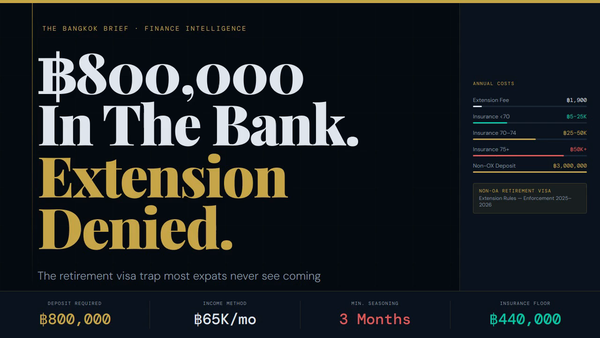
Chiang Mai is the most popular choice among retirement visa holders for good reason: the cost of living aligns well with fixed pension income, the expat community is large and well-established, and access to quality private hospitals (Bangkok Hospital Chiang Mai, Chiang Mai Ram) is good. The Non-OA visa requires proof of ฿800,000 in a Thai bank account or ฿65,000/month income — a threshold more comfortably met in Chiang Mai than in Phuket on an equivalent budget.
Does the choice of city affect my Thai tax liability?
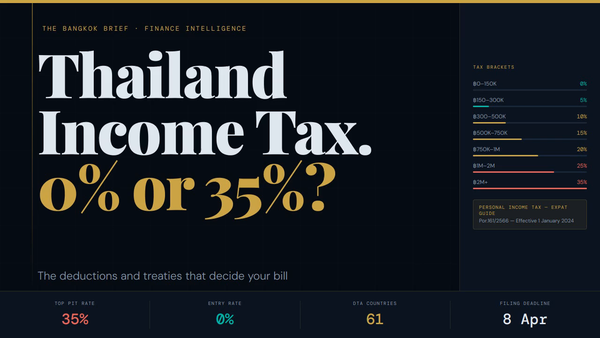
City of residence does not affect your Thai personal income tax rate — the same progressive brackets apply nationally. However, city choice affects your total remittances and therefore your taxable base if you are remitting foreign income into Thailand (see Revenue Department Instruction Paw 161/2566, effective 1 January 2024). A higher cost of living city means higher remittances, which means a higher potential Thai tax bill if that income is assessable.
Are utility costs included in most Bangkok rental listings?
Almost never. Thai rental listings quote the bare rent figure. Electricity, water, and sometimes internet are billed separately — and as noted above, electricity at condo resale rates can add ฿2,500–฿5,000/month to your real cost. Always ask the landlord or agent for the average monthly electricity bill of the specific unit before signing a lease. Units on high floors with more sun exposure and less shade will run significantly hotter and therefore more expensive to cool.
Has Chiang Mai's cost of living increased significantly in recent years?
Yes, but modestly compared to Phuket. Chiang Mai has seen expat-driven gentrification in the Nimman and Santitham areas, pushing rents up roughly 10–15% since 2021 in those specific pockets. The broader city remains substantially cheaper than Bangkok and Phuket. The biggest risk for Chiang Mai expats is the slow erosion of the cheapest options, particularly in neighbourhoods that have become visible on Instagram and digital nomad forums.
Action Steps
- Use the city budget ranges above to pressure-test your current or planned monthly income against the all-in cost for your target city — not just rent.
- Add electricity (฿1,500–฿5,000/month depending on city and unit) as a line item if it is currently absent from your budget model.
- Calculate your annual food cost at both the local diet and Western diet rate — the difference will likely be the largest single variable in your budget.
- If you are considering Phuket, request rental listings from Q1 2025 and Q1 2026 to verify current inflation trend before committing to a lease.
- Cross-reference your monthly remittance requirement against Thailand's personal income tax brackets under the post-Paw 161/2566 rules if you are a Thai tax resident (180+ days/year).
- Subscribe to The Bangkok Brief newsletter at thebangkokbrief.com for city-specific budget templates and visa cost breakdowns updated quarterly.